2025 Visual Trends: What’s Shaping Creative Design This Year
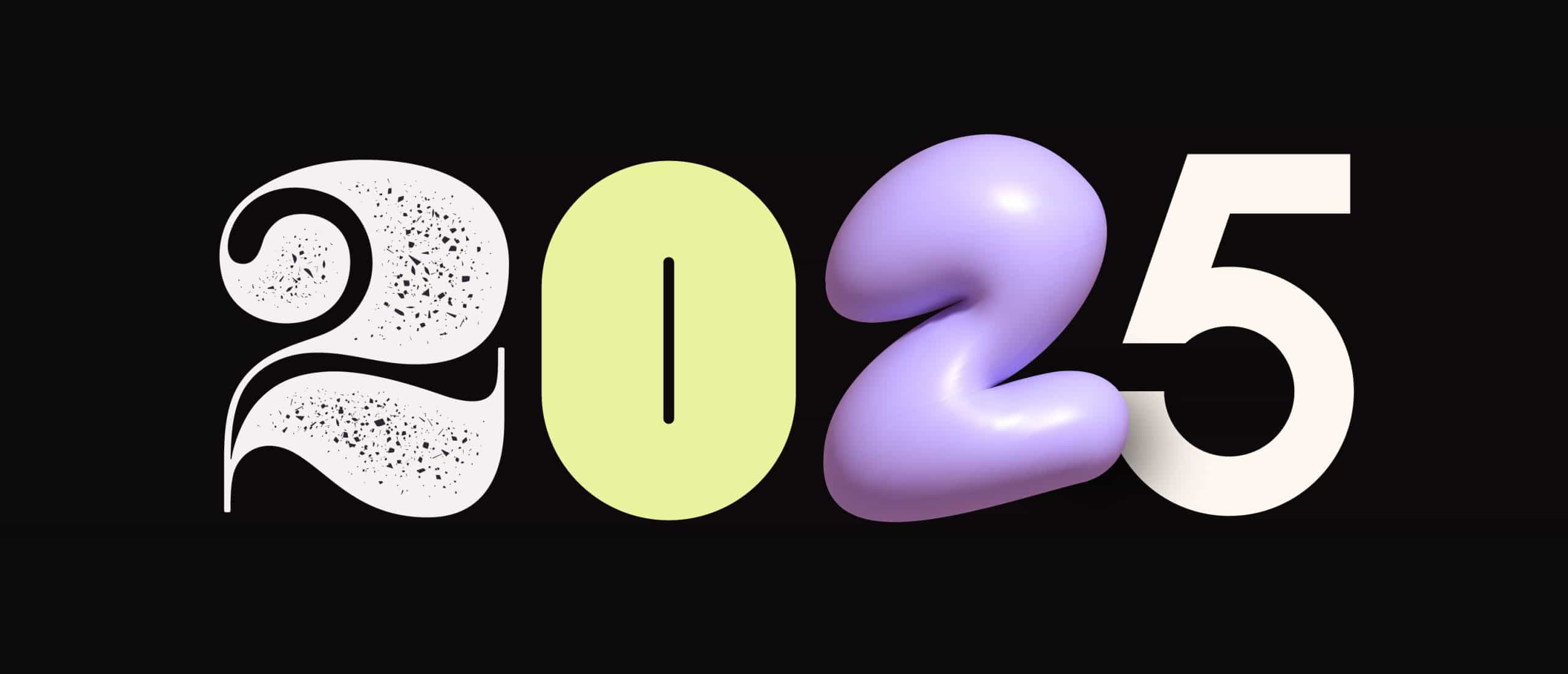

Digital experiences are getting more real in 2025 – in ways both high-tech and beautifully human. We’re seeing technology pushed to spectacular new limits, as brands use CGI to transform city blocks into living experiences and create 3D effects that make social content feel close enough to touch.
At the same time, there’s a surge of raw human expression in design, with brands embracing hand-drawn elements, torn paper textures and even “anti-design” aesthetics that rebel against the polished perfection of digital interfaces.
In this deep dive, we explore the key design trends shaping creative work this year and how you can thoughtfully incorporate them into your own projects, whether you’re refreshing a brand identity or crafting a digital campaign.
1. Playful illustrations
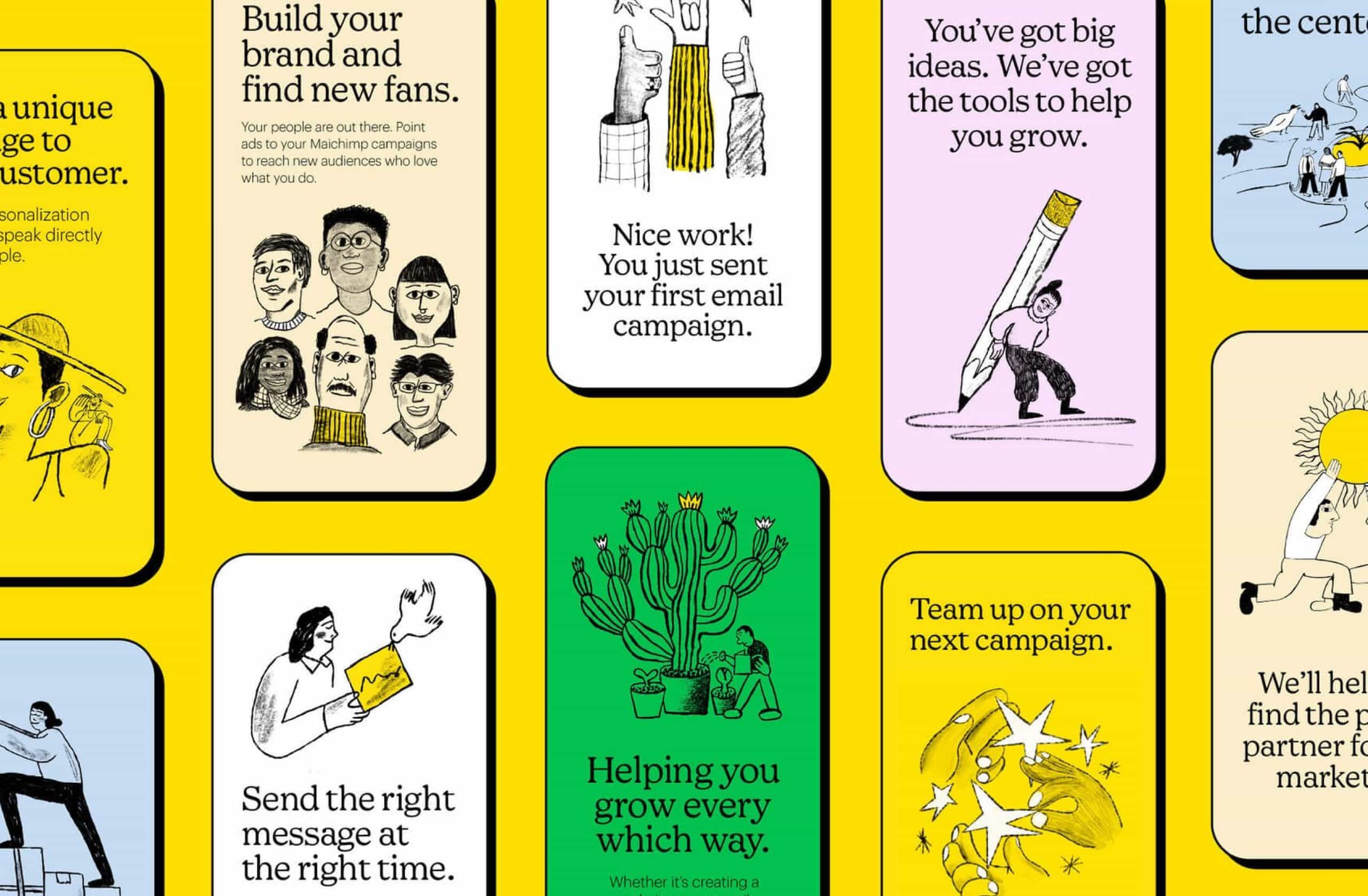

The rise of doodle-style illustrations and hand-drawn elements signals a rebellion against perfect, AI-generated aesthetics. Tech companies, traditionally associated with sleek, polished interfaces, are leading this charge toward more organic, almost child-like design expressions.
Take Notion’s latest brand evolution – their interface now features deliberately imperfect illustrations, hand-drawn icons, and playful doodles that feel like they could have been sketched in a designer’s notebook during a moment of inspiration. This approach has proven so successful that we’re seeing it adopted across various sectors, from fintech to educational platforms.
Key Elements:
- Hand-drawn illustrations and icons
- Deliberately imperfect lines and shapes
- Natural, flowing lines
- Child-like simplicity in complex environments
2. Vision-board aesthetic
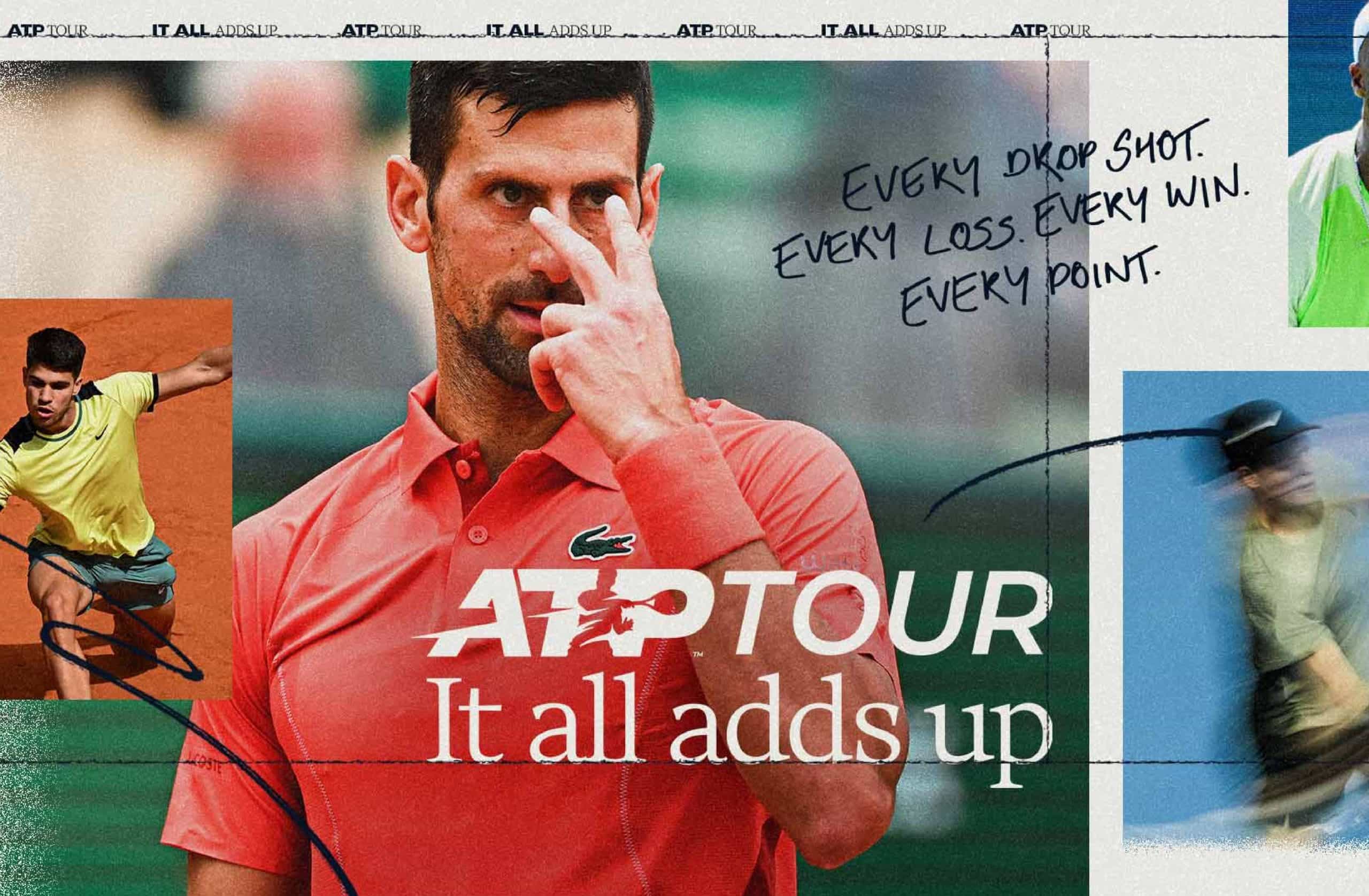
Digital design is experiencing a nostalgic renaissance through the structured scrapbook aesthetic, a trend that combines the emotional resonance of physical memorabilia with careful digital composition. Designers are layering Polaroid-style images, handwritten notes, and tactile textures while maintaining intentional structure and balance.
At its heart, this trend is about intentional layering. It takes the spirit of those late-night inspiration sessions surrounded by magazine cutouts and elevates it through thoughtful design principles.
We’re seeing this across sectors: The ATP weaves vintage style photography and handwritten elements into it’s identity for 2025, while Stop the Traffik uses human-centered collage to tackle sensitive subjects with distinction. Both brands show how this aesthetic can strengthen storytelling while staying true to their core mission.
Key Elements:
- Layered paper textures that create depth
- Polaroid frames with that perfect white border
- Typography that feels like it was scribbled in a journal
- Mixed media collage that tells a story
3. purposefully disruptive
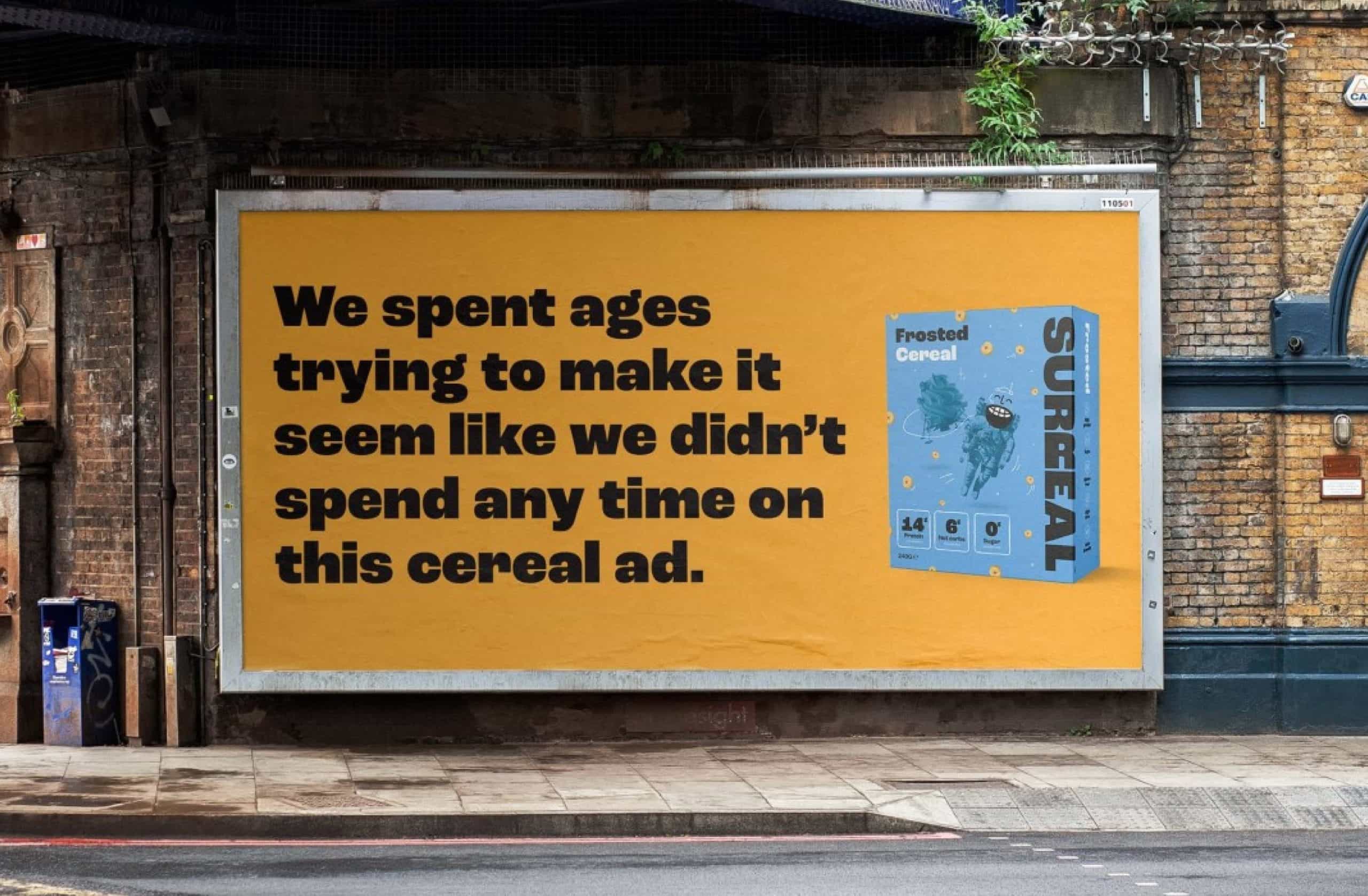

The nonconformist movement reached its peak in 2024, epitomised by Jaguar, whose rebrand caused polarising reactions with it’s departure from the sleek and predictable it’s audience is used to seeing. This disruptive approach in visuals and tone of voice we can expect to see more of in 2025 as brands look to position themselves further away from their competitors. Cereal brand Surreal mirrors this with it’s rebellious and humorous tone of voice, unafraid to break away from design conventions.
In 2025, designers are intentionally mismatching fonts, playing with irregular spacing, and embracing chaos in layouts. This trend particularly resonates in creative industries, where breaking conventional rules creates unique, attention-grabbing visuals that feel distinctly human-made rather than computer-generated.
But let’s be clear – this isn’t a trend for every brand. Anti-design works best for brands that can authentically embrace disruption. After all, there’s a fine line between breaking rules beautifully and just looking messy.
Key Elements:
- Deliberately provocative color choices
- Unconventional layout hierarchies
- Playful misalignment and tension
- Clear brand voice despite the chaos
4. Opulent minimalism
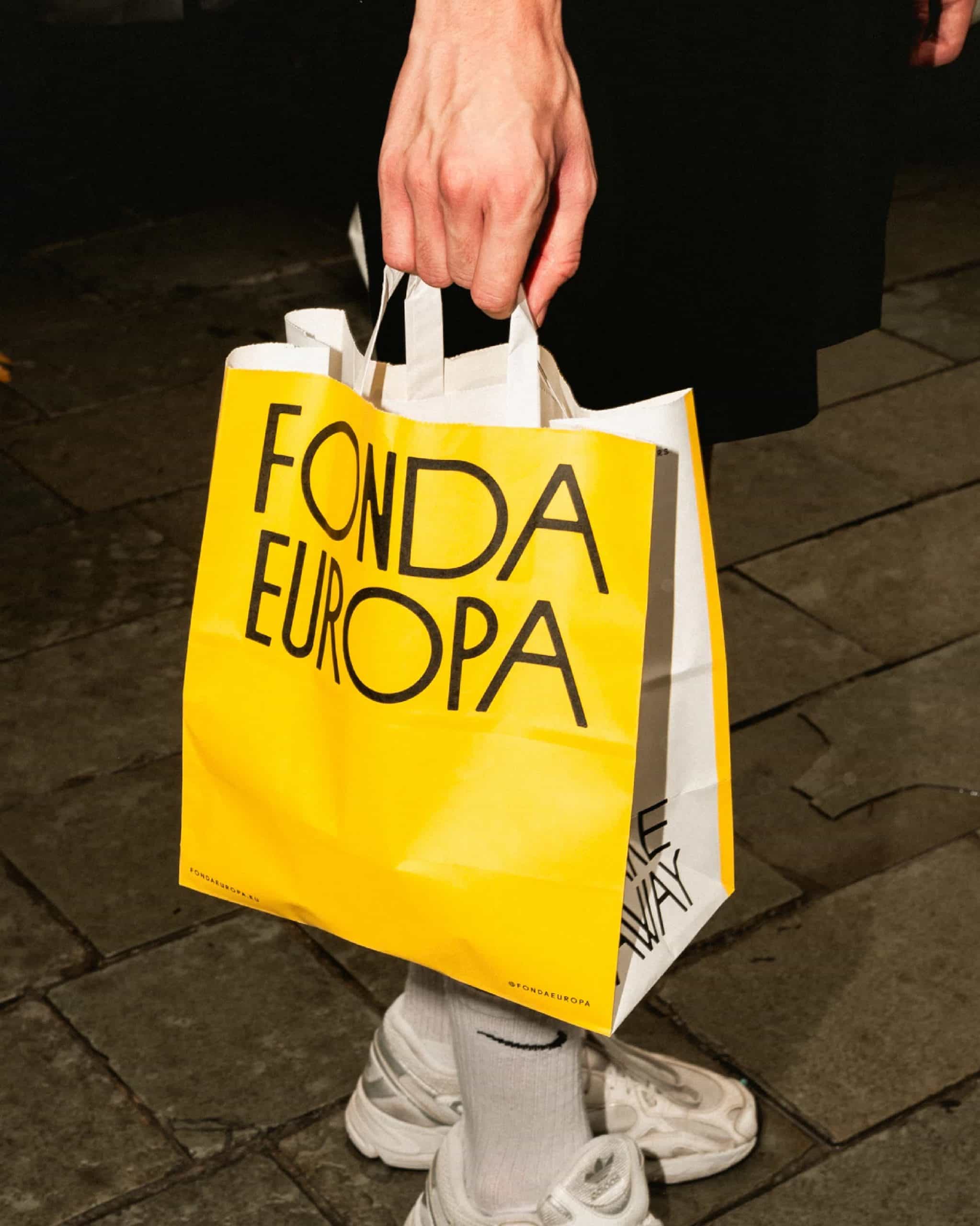

2025 is seeing two luxury-led aesthetics converge in fascinating ways. While Art Deco celebrates its centenary since that landmark 1925 Paris exhibition, its influence is finding new expression in contemporary design.
Look at Requena Office’s Fonda Europa rebrand, where bold Art Deco typography and high-exposure flash photography meet a striking yellow palette. At the same time, a new minimalism is emerging – one that pairs stripped-back aesthetics with rich, intricate details balanced by generous negative space.
This fusion moves us beyond the sleek minimalism of recent trends, blending the precision of Art Deco with a bold, modern twist. Clean geometric lines meet striking color palettes, bringing a sense of energy and sophistication. Classic fonts are reimagined in daring tones, while subtle textures add depth, creating a style that feels both timeless and refreshingly contemporary.
Key elements:
- Elongated serif fonts with dramatic verticals
- Rich metallics (gold, bronze, copper) paired with matte finishes
- Geometric patterns with organic overlays
- Warm, grounded colour palettes
- Balanced ornamentation
5. The rise of “phygital” experiences


Want to see where design is heading in 2025? Just look up. JD Sports Big Ben North Face OOH campaign shows how CGI is transforming city landscapes into immersive brand experiences. But here’s the thing – you don’t need a massive billboard budget to make an impact. We proved this with Dunlop at the ATP Tour Finals in Turin, where we collaborated with tennis influencer Edoardo Santonocito to create scroll-stopping FOOH content that brought their sustainable packaging story to life.
This year, we expect a fundamental shift in how brands approach traditional marketing tools. Flat infographics will gain depth that makes data feel alive. Digital posters will gain texture that makes them almost touchable. Brand identities are evolving into living, breathing 3D entities.
But remember, the sweet spot lies in using 3D where it genuinely enhances your message, not just because it looks cool. Sometimes a subtle depth effect can be more powerful than a full CGI extravaganza.
Key Elements:
- Hyper-realistic CGI that works across platforms
- Textured digital experiences that demand attention
- Motion-rich social content that stops the scroll
- Phygital retail installations that blur digital and physical
6. Dynamic typography
Typography is breaking free from static constraints in 2025, with designers treating text as a living, breathing element of design.
We’re seeing a beautiful collision of experimental layouts and variable fonts that adapt like chameleons across different platforms, all while maintaining their core identity. Take Adidas’s Chop typeface – it maintains its sporty DNA while seamlessly adapting across platforms and campaigns, showing how a font can be both consistent and dynamic.
Beyond just technical adaptability, we’re seeing more brands let their letters take center stage, as seen in Spotify’s 2024 edition of ‘Wrapped’. Their bespoke typeface twisted, morphed, and danced across screens, transforming from bold declarations to playful whispers – proving that letters themselves can be as expressive as any image.
As we navigate through 2025, a fascinating pattern emerges: design is simultaneously pushing technological boundaries while yearning for human touch. From the raw rebellion of anti-design to the nostalgic comfort of vision boards, from playful illustrations to CGI transforming city spaces – we’re seeing a creative landscape that celebrates both digital innovation and authentic human expression.
Ready to explore how these trends could transform your brand’s visual story?
For monthly inspiration straight to your inbox, sign up to our newsletter